Drains clog repeatedly when the underlying cause is never addressed — not just the blockage itself. The most common causes are grease coating pipe walls in kitchen drains, hair and soap scum buildup in bathroom drains, tree root intrusion in sewer lines, deteriorating cast iron pipes with rough interior surfaces, and improper drain slope. Basic snaking clears the path but leaves the cause intact. Charleston Plumbing Services uses hydro-jetting and camera inspection to fix the actual problem throughout Charleston, WV.
If you've had the same drain cleaned three times in the past year and it keeps coming back, you already know that something isn't working. The clog gets cleared, the drain runs fine for a few weeks, and then the problem returns — often faster than the last time. It's one of the most frustrating plumbing experiences a homeowner can have, and it almost always means the same thing: the cause of the clog is still there, and the method being used to clear it isn't addressing it.
Recurring drain clogs are not a mystery. They have specific, identifiable causes — and once the right cause is identified and properly addressed, the recurring problem stops. This guide walks through every major cause of repeated drain clogs in Charleston, WV homes, explains why basic snaking and chemical cleaners fail to solve them, and describes what professional intervention actually looks like when it's done correctly.
The Six Most Common Causes of Recurring Drain Clogs
1. Grease and Fat Buildup in Kitchen Drain Lines
Grease, cooking oil, and animal fat are liquid when hot and solid when cool — which means every time they're washed down a kitchen drain, they flow a short distance down the line and then begin to solidify on the pipe walls as the temperature drops. Each subsequent pour adds another layer. Over weeks and months, the effective diameter of the drain line narrows progressively until even normal water flow struggles to pass through. A mechanical snake punches a hole through the accumulated grease but leaves the coating on the pipe walls completely intact — which is why the next clog forms faster than the one before it. The only solution that actually removes the grease from the pipe walls is hydro-jetting, which scours the entire interior surface clean at high pressure.
2. Hair and Soap Scum in Bathroom Drains
Hair is the primary driver of bathroom sink, tub, and shower drain clogs throughout Kanawha Valley homes. It catches on the drain stopper or strainer and forms a progressively thicker net that traps everything else flowing past it — soap scum, skin cells, and residue from personal care products. Soap scum — the residue left when bar soap reacts with the minerals in water — coats the hair mass and the surrounding pipe walls, creating a sticky, increasingly dense buildup that basic snaking pulls out partially but rarely completely. The portion left behind becomes the foundation for the next clog, which forms faster because the surface area for new material to cling to has increased.
3. Tree Root Intrusion in Sewer Lines
Tree root intrusion is one of the most common and most destructive causes of recurring drain problems throughout the Kanawha Valley — particularly in older neighborhoods throughout Charleston, St. Albans, Dunbar, South Charleston, and Nitro where mature trees have had decades to extend their root systems. Roots are drawn to the moisture and nutrients present in sewer lines and will infiltrate even hairline cracks in aging clay or cast iron pipe joints. Once inside, they branch and thicken with each growing season until what started as a thin fiber infiltration becomes a mass that causes repeated blockages. Mechanical snaking cuts through root intrusions temporarily — but the roots grow back within weeks or months. The only lasting solutions are hydro-jetting to remove existing roots combined with pipe lining or repair to seal the entry points, or sewer line replacement where the pipe has deteriorated beyond repair.
4. Deteriorating Cast Iron Pipes
A significant portion of homes throughout Charleston's established neighborhoods were built between the 1930s and 1970s with cast iron drain pipes that are now 50 to 90 years old. Cast iron deteriorates from the inside out over decades, developing rough, corroded, pitted interior surfaces that accumulate debris at a dramatically accelerated rate compared to smooth-walled modern PVC pipe. The rough texture catches and holds grease, soap scum, hair, food particles, and mineral deposits from the water supply — creating a surface that is perpetually prone to buildup regardless of how often it's cleaned. When a cast iron pipe has deteriorated to this degree, cleaning it is a maintenance task rather than a solution — the pipe itself is the problem, and the only permanent fix is replacement.
5. Improper Drain Slope
Drain pipes rely entirely on gravity to carry waste away from your home. Every horizontal drain line needs to be installed at the correct slope — typically a quarter inch of drop per foot of run — to ensure that water and waste flow reliably toward the sewer rather than pooling in low spots. Pipes that were never installed at the correct slope, or that have settled and shifted over decades of ground movement, create low points where debris accumulates and blockages form repeatedly. Snaking clears the accumulated debris temporarily, but the debris returns because the underlying slope problem continues to create the same pooling conditions. This is a structural problem that requires a professional assessment and, in many cases, pipe rerouting or replacement to solve permanently.
6. Flushing Items That Don't Belong in Drains
Wipes marketed as "flushable" are one of the leading causes of recurring sewer line blockages throughout the Kanawha Valley — they do not break down the way toilet paper does and accumulate in sewer lines until they cause a partial or complete blockage. Other common culprits include paper towels, cotton balls, feminine hygiene products, dental floss, and food particles from kitchen drains that should be composted or disposed of in the trash. In bathroom sinks, toothpaste, hair gel, and residue from personal care products contribute meaningfully to buildup over time. Changing these habits reduces the frequency of future clogs — but it doesn't address the buildup that has already accumulated inside the pipe.
Why Chemical Drain Cleaners Make Recurring Clogs Worse
Before addressing what actually works, it's worth explaining why the most common DIY response to a recurring drain clog — reaching for a bottle of Drano or Liquid-Plumr — consistently makes the problem worse over time rather than better.
Chemical drain cleaners work by generating heat through a caustic chemical reaction that dissolves organic material. They do work in the very short term for minor organic clogs close to the drain opening — they dissolve enough of the blockage to temporarily restore flow. The problem is that this chemical reaction doesn't discriminate between the clog and the pipe itself. Repeated applications of caustic chemical cleaners degrade PVC fittings, accelerate corrosion in aging metal pipes, soften the adhesive joints in plastic pipe systems, and in cast iron pipes already weakened by decades of corrosion, accelerate the internal deterioration that is causing the recurring problem in the first place.
Every time a chemical drain cleaner temporarily clears a clog, it reinforces the belief that the problem is solved — when in reality the underlying cause is completely untouched and the next clog is already forming. For any drain that has clogged more than once in a 12-month period, chemical cleaners are not an appropriate solution. The recurring nature of the problem is itself the signal that professional intervention is needed.
Why Basic Snaking Doesn't Solve Recurring Clogs
A mechanical drain snake — also called an auger — is a flexible cable fed through the drain line to physically break up and pull out blockages. For a one-time localized clog close to the drain opening, mechanical snaking is fast and effective. For recurring clogs caused by any of the six causes above, snaking addresses only the symptom and not the cause.
When a snake punches through a grease clog, it creates a clear path for water to flow — but the grease coating the pipe walls that created the clog in the first place is still there, ready to catch the next layer of material. When a snake cuts through a tree root intrusion, the roots that weren't pulled out continue to grow back immediately. When a snake clears a clog from a corroded cast iron pipe, the rough interior surface that caught the debris in the first place is unchanged. In each case, the clog returns because the snake addressed the blockage without touching the cause.
A drain that clogs once is usually a simple localized problem. A drain that clogs repeatedly is telling you something about the pipe itself — and the solution is diagnosis and root cause treatment , not repeated clearing of the same symptom.
What Actually Fixes Recurring Drain Clogs Permanently
The right solution for a recurring drain clog depends on the cause — which is why accurate diagnosis is the most important first step. Charleston Plumbing Services uses two tools that make diagnosis accurate and definitive before recommending any solution.
Video Camera Inspection
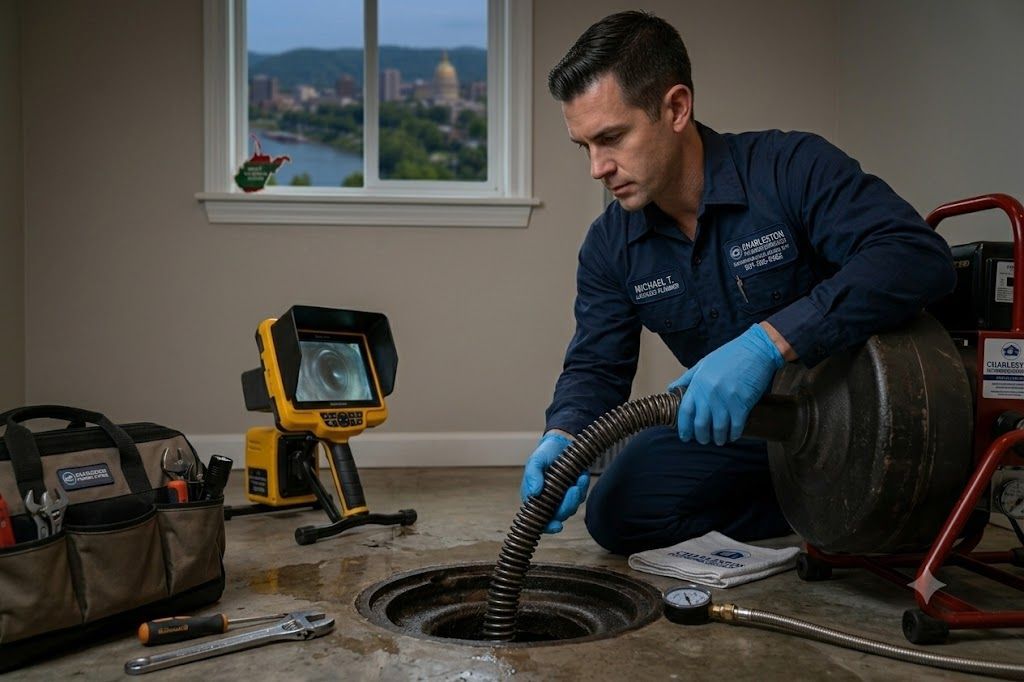
A high-definition waterproof camera fed through the drain or sewer line shows exactly what is happening inside the pipe in real time — grease coating, root intrusion, pipe wall deterioration, joint failures, buildup location and severity, and whether the pipe has structural issues that require repair rather than cleaning. A camera inspection eliminates guesswork entirely and ensures that the solution we recommend is the right one for the specific cause we found — not a guess based on symptoms alone.
Hydro-Jetting
Hydro-jetting uses a high-pressure water stream delivered through a specialized nozzle to scour the entire interior pipe wall clean as it moves through the line — not just punch through the blockage. It removes grease coatings, mineral deposits, soap scum, accumulated debris, and smaller root intrusions completely, restoring the pipe close to its original interior diameter. The results last significantly longer than mechanical snaking because the underlying buildup on the pipe walls is actually removed rather than bypassed. For recurring clogs caused by grease buildup, cast iron deterioration, or minor root intrusion, hydro-jetting is the most effective and longest-lasting cleaning solution available.
For Grease Buildup
Hydro-jetting scours the grease coating from the pipe walls completely. Stop pouring grease down the drain going forward. Annual professional cleaning maintains results long-term for kitchen drain lines with heavy cooking use.
For Hair & Soap Scum
Install hair catchers on all tub and shower drains and clean them after every use. Professional hydro-jetting removes accumulated buildup completely. Annual drain cleaning maintains results in high-usage bathrooms.
For Tree Root Intrusion
Hydro-jetting removes existing roots. Video inspection identifies entry points and pipe condition. Pipe lining or spot repair seals entry points permanently. Full replacement where pipe has structurally deteriorated.
For Deteriorated Cast Iron
When cleaning no longer delivers lasting results, pipe replacement is the right call. Modern PVC or ABS pipe eliminates the rough interior surface that causes recurring buildup and lasts significantly longer.
For Improper Slope
Professional assessment identifies low points and slope deficiencies. Pipe rerouting or replacement corrects the slope problem permanently. No amount of cleaning resolves a structural slope issue.
For Flushing Issues
Stop flushing wipes, paper towels, and non-toilet-paper items immediately. Hydro-jet the sewer line to clear existing accumulation. Install a drain strainer in kitchen sinks to catch food particles before they enter the drain.
Specific Drain Clog Challenges in Charleston, WV Homes
Charleston area homes present specific drain challenges that make recurring clogs more common here than in newer construction markets throughout the country. Understanding the local context helps homeowners in this area make more informed decisions about drain maintenance and repair.
The Aging Infrastructure Challenge
A substantial portion of homes throughout Charleston, South Charleston, St. Albans, Dunbar, and Nitro were built between the 1930s and 1970s with cast iron drain systems that are now operating well past their expected service life. The interior surfaces of these pipes have roughened, scaled, and corroded over decades to the point where they accumulate debris faster than any cleaning schedule can effectively keep up with. For homeowners in these communities dealing with recurring drain issues, a camera inspection that honestly assesses the condition of the pipe itself is the essential first step — because if the pipe is the problem, cleaning it is a maintenance task rather than a solution.
The Tree Root Challenge
The mature tree canopy that characterizes established Kanawha Valley neighborhoods is one of the defining characteristics of communities like Charleston, Dunbar, St. Albans, and South Charleston. It is also one of the primary drivers of recurring sewer line problems throughout these areas. The same mature trees that provide shade and character send root systems deep into residential lots — and those root systems find sewer line joints with remarkable reliability. Any homeowner in an established Kanawha Valley neighborhood with large trees on or adjacent to the property who is dealing with recurring sewer backups or slow drains throughout the house should treat tree root intrusion as a primary suspect until a camera inspection rules it out.
Prevention — What You Can Do Between Professional Cleanings
Professional drain cleaning on the right schedule addresses the buildup that has already accumulated. Daily habits in your home affect how quickly that buildup returns. A few consistent practices meaningfully extend the time between professional visits and reduce the likelihood of an emergency backup between scheduled cleanings.
Daily Habits That Prevent Recurring Drain Clogs
- Never pour grease, cooking oil, or fat down the kitchen drain — collect it in a container and dispose of it in the trash once solidified
- Run hot water for 30 seconds after washing dishes to help move residual grease further down the line
- Use a hair catcher on every tub and shower drain and clean it after every single use — not weekly
- Only flush toilet paper — wipes, paper towels, cotton balls, and dental floss all cause sewer line buildup regardless of what the packaging says
- Run cold water before, during, and after using the garbage disposal to solidify any grease so it passes through rather than coating the pipe walls
- Pour a kettle of boiling water down kitchen drains once a week to melt and move grease residue before it accumulates
- Schedule professional drain cleaning every one to two years — annually for older homes with cast iron pipes or properties with mature trees
Most standard residential homes in the Charleston area benefit from professional drain cleaning every one to two years. Older homes with cast iron drain pipes — common throughout Charleston's historic neighborhoods — benefit from annual cleaning. Properties with mature trees on or adjacent to the lot should have the main sewer line camera-inspected annually to monitor root intrusion. If you've had a backup in the past 12 months, schedule a professional cleaning now rather than waiting for the annual cycle.
Ready to Fix Your Recurring Drain Problem for Good?
If you've been dealing with the same clogged drain over and over, the answer isn't another bottle of Drano or another basic snaking — it's finding out what is actually causing the problem and addressing it at the source. Charleston Plumbing Services provides professional drain cleaning, hydro-jetting, video camera sewer inspections, root removal, and complete sewer line services for homeowners throughout Charleston, South Charleston, St. Albans, Dunbar, Nitro, Hurricane, Teays Valley, Scott Depot, Cross Lanes, Sissonville, Belle, Elkview, and Fayetteville, WV.
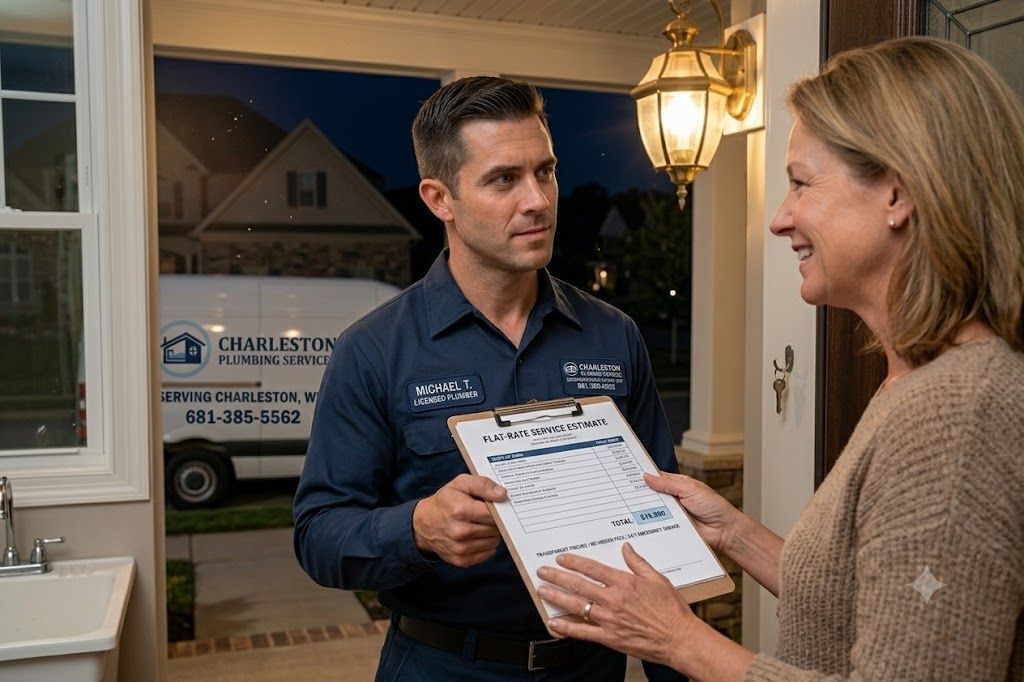
Free written estimates on every job. Same-day service often available. Flat-rate pricing that doesn't change once work begins. And real 24/7 availability for drain emergencies that can't wait until morning.
Fix Your Recurring Drain Problem for Good
Call Charleston Plumbing Services today for professional drain cleaning, hydro-jetting, and camera inspection throughout the Kanawha Valley.