Tank vs Tankless Water Heater — Which Is Right for You? | Charleston WV
Tank or tankless water heater — which one makes sense for your West Virginia home? Get an honest comparison from the licensed plumbers at Charleston Plumbing Services.
At some point, every homeowner faces the same decision. The water heater is aging out, making strange noises, or simply not keeping up anymore — and it's time to replace it. For most of the past century, that decision was simple: buy a new tank, install it, move on. But over the past decade, tankless water heaters have become a genuinely compelling alternative, and more West Virginia homeowners are asking whether making the switch makes sense for their household.
The honest answer is that it depends. Both systems have real advantages and real limitations, and the right choice comes down to your home's setup, your family's hot water habits, and your long-term budget priorities. This guide will walk you through everything you need to know to make an informed decision — without the sales pitch.
HOW EACH SYSTEM WORKS
Understanding the basic difference between the two systems makes everything else easier to evaluate.
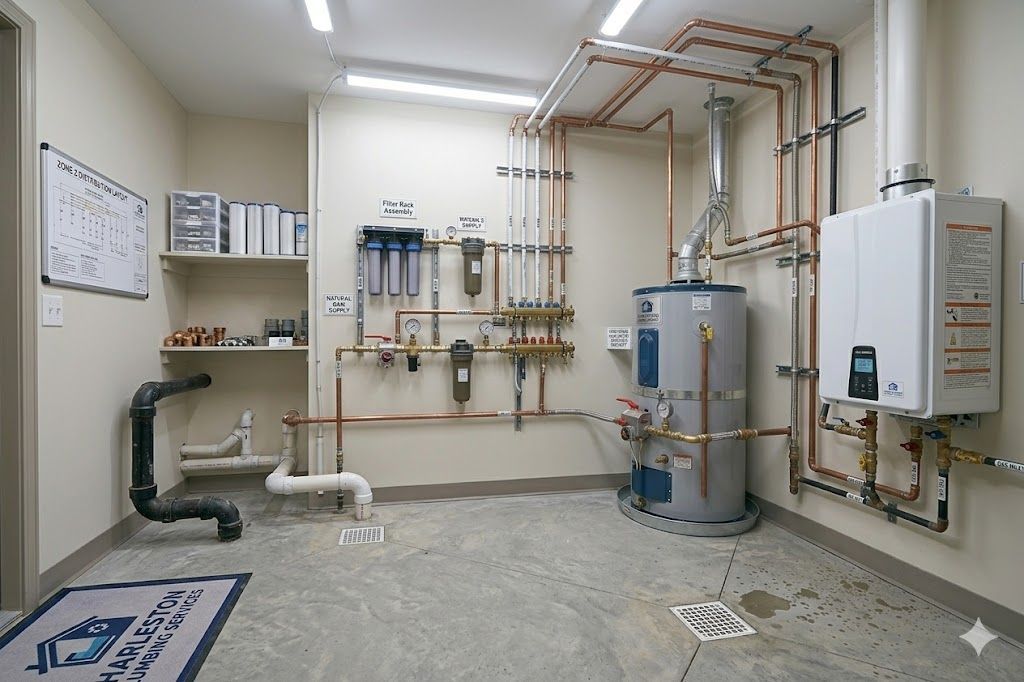
A traditional tank water heater stores a large volume of water — typically 40 to 50 gallons for a residential unit — and keeps it heated continuously so hot water is ready whenever you need it. The tank refills and reheats after each use. It's a simple, reliable system that most plumbers and homeowners are deeply familiar with, and it has been the standard in American homes for generations.
A tankless water heater — also called an on-demand water heater — works differently. Instead of storing pre-heated water, it heats water directly as it flows through the unit when a hot water tap is opened. There is no storage tank, no standby heat loss, and theoretically no limit to how long the hot water lasts as long as demand doesn't exceed the unit's flow rate capacity. The trade-off is a higher upfront cost and, in some cases, installation requirements that add complexity and expense.
THE CASE FOR A TRADITIONAL TANK WATER HEATER
For many West Virginia homeowners, a traditional tank water heater remains the right choice — and there's no shame in that. Tank units have a lower upfront cost, typically ranging from $800 to $1,500 installed in the Charleston area, compared to $1,200 to $2,000 or more for a tankless system. They're simpler to install, especially in homes that already have the existing gas or electric connections in place, and most plumbers can complete the swap in a few hours.
Tank water heaters are also more forgiving in homes with well water. The Kanawha Valley has a mix of municipal and private well water systems, and well water with high mineral content can cause buildup inside a tankless unit's heat exchanger that requires more frequent maintenance. A tank system is generally more tolerant of water quality variation, though regular flushing is still recommended to extend its lifespan.
The main limitation of a tank system is standby heat loss — the energy consumed keeping stored water hot around the clock, whether you're using it or not. In a well-insulated modern unit this loss is minimized, but it never disappears entirely. For households with moderate hot water demand and a tighter replacement budget, a high-efficiency tank unit from a trusted brand like Rheem or A.O. Smith is a smart, reliable investment that will serve the home well for 10 to 12 years.
THE CASE FOR A TANKLESS WATER HEATER
The appeal of a tankless water heater comes down to three things: energy efficiency, longevity, and the experience of never running out of hot water. Tankless systems eliminate standby heat loss entirely, which can reduce water heating energy costs by 20 to 30 percent depending on usage patterns — a meaningful saving over time in a state where energy costs have been rising steadily. A well-maintained tankless unit from a quality brand like Rinnai or Navien can last 20 years or more, compared to 10 to 12 years for a typical tank unit. Over the full lifespan of the system, the higher upfront cost often evens out.
The unlimited hot water aspect is particularly valuable for larger households. If you have a family where multiple people are showering in the morning, laundry and dishwasher cycles are running simultaneously, and the demand on your water heater is consistently high, a properly sized tankless system handles that load without the recovery time a tank unit requires. Running out of hot water mid-shower because the tank hasn't had time to reheat is a frustration that tankless systems eliminate entirely.
There are real considerations to work through before committing to a tankless installation, though. Whole-home gas tankless units require adequate gas line capacity — many older homes in Charleston and throughout the Kanawha Valley will need a gas line upgrade to support the higher BTU demand of a tankless system, which adds to the installation cost. Proper venting is also required, and in some home configurations that involves additional work. Electric tankless systems for whole-home use require significant electrical capacity that many older homes don't have without a panel upgrade. These are not reasons to avoid going tankless — but they are costs that need to be factored into the total investment honestly.
WHAT WEST VIRGINIA HOMEOWNERS SPECIFICALLY SHOULD CONSIDER
Living in the Kanawha Valley brings a few specific considerations that don't always come up in national comparisons of tank vs. tankless systems.
Cold incoming water temperature is one of them. Tankless water heaters heat water on demand, which means their flow rate capacity — how many gallons per minute of hot water they can deliver — is affected by how cold the incoming water is. In West Virginia, groundwater temperatures drop significantly in winter, which means a tankless unit that performs perfectly in July may feel slightly less robust in January if it isn't sized correctly for cold-weather demand. A properly sized unit from an experienced installer accounts for this, but it's a reason to work with a plumber who knows the local conditions rather than simply ordering the cheapest unit available online.
Older homes in Charleston's historic districts present their own set of considerations. Many of these properties have aging gas lines, non-standard utility room configurations, and existing infrastructure that may require additional work before a tankless installation is straightforward. This doesn't make tankless the wrong choice for an older home — it just means the installation assessment matters more than it would in a newer build. A good plumber will identify these requirements upfront so there are no surprises once the project is underway.
For newer homes and recent construction throughout Teays Valley, Hurricane, and Scott Depot, tankless installations tend to be more straightforward. These properties typically have modern gas lines, adequate electrical panels, and utility room layouts that accommodate tankless units without significant modification.
WHICH ONE SHOULD YOU CHOOSE
Here is a straightforward way to think through the decision. A traditional tank water heater is likely the better fit if your replacement budget is under $1,200, your current gas or electric connections are already in place and adequate, your household hot water demand is moderate, or you have well water with high mineral content that would require frequent tankless maintenance.
A tankless water heater is likely the better fit if your household consistently runs out of hot water, you plan to stay in the home long enough to recoup the higher upfront cost through energy savings, you have adequate gas line capacity or are willing to invest in an upgrade, and you want a system that will last significantly longer before needing replacement.
The best way to get a definitive answer for your specific home is to have a licensed plumber assess your current setup — your gas line capacity, your existing venting, your household demand, and your utility room configuration — and give you an honest recommendation based on what they find. That's exactly what our team does at no charge when you request a free water heater estimate from Charleston Plumbing Services.
Call Us Today
Whether you're leaning toward a traditional tank replacement or you're ready to explore the switch to tankless, Charleston Plumbing Services is here to help you make the right call for your home and your budget. We install and service both systems throughout Charleston, WV and the entire Kanawha Valley — including South Charleston, Nitro, Hurricane, Teays Valley, Dunbar, St. Albans, Sissonville, Elkview, Barboursville, and Huntington. Our estimates are free, our pricing is upfront, and our recommendations are honest — because we'd rather give you the right water heater than the most expensive one.
Call us today or request your free water heater estimate online and let's figure out the best solution for your home together.
Get a Free Water Heater Estimate → or Call Us to Compare Your Options →
Latest News From Charleston Plumbing Services